Hot demand for fusion flavours drives growth

Multinational food ingredients brand Langdon, is expanding in New Zealand with a more than $15-million development in Drury.

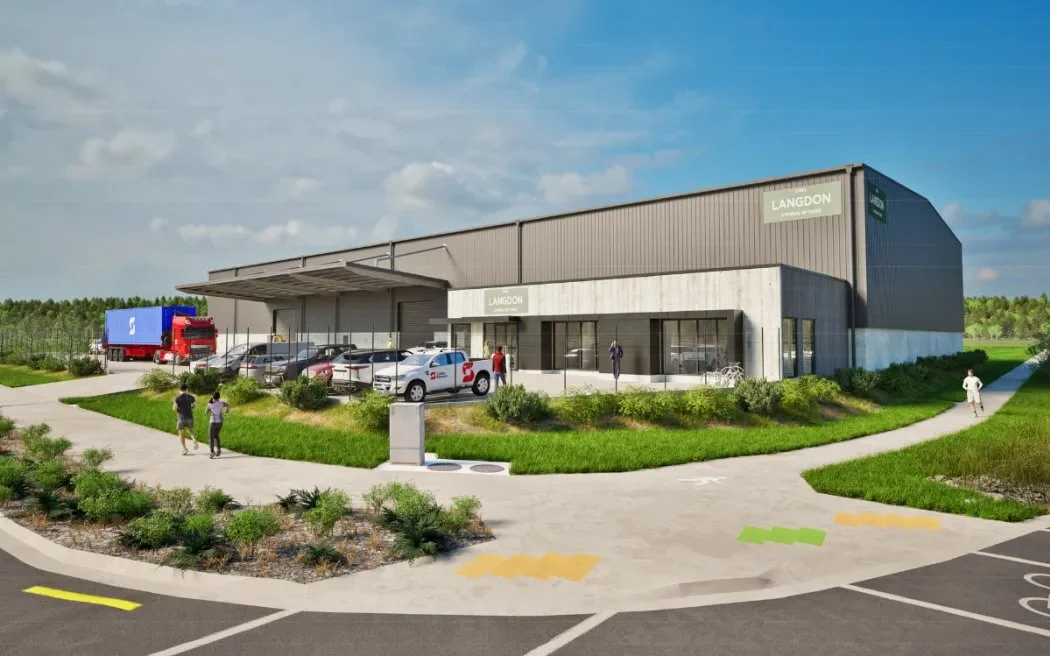
Langdon, which has a distribution presence in seven countries, commissioned industrial property and construction company, Calder Stewart, to build the 3,500-square-metre (sqm) facility on a 361 hectare site at South Auckland's Drury South Crossing.

The warehouse would have more than double the capacity of the business's previous site.

"Younger consumers are reshaping the country's eating habits at an accelerating pace," Langdon NZ country manager Kenny Pihema said.

He said the ingredient warehousing and distribution facility was responding to a surging New Zealand demand for third culture cuisine and Gen Z's evolving interest in foods popularised on social media.

Third culture cuisine referred to dishes created by people raised between two or more cultures who blend their family heritage with the food traditions of the country they grew up in to produce entirely new flavour profiles.
Pihema said many young people come from multicultural households and want flavours that reflect their blended identities, which was driving demand for global spices, botanicals and natural powders.

"Gen Z are the first generation to discover new flavours online rather than at home. Many of them are trying chillies, spices and global cuisines for the very first time through TikTok, food challenges and multicultural friend groups.

"That discovery loop is completely different from older generations and it is rapidly reshaping what manufacturers need."

He said fusion flavours were showing up in restaurants and ready to eat meals.

"New Zealand food manufacturers and exporters are among the world's most innovative however, they need access to ingredients that simply were not part of the country's pantry a decade ago. This expansion is a direct response to that," he said.

Pihema said global heat challenges, spice tastings and cross-cultural food trends amplified through social media have pushed named chillies, heat profiles and new aromatics into the mainstream.

"Heat is exploding at the moment, Gen Z are driving the chilli culture and experimenting at a scale we have never seen."

Langdon's Australian pantry offered more than 2,500 ingredients.

"Thirty years ago when we first launched in New Zealand, we offered less than a handful of chilli varieties.

"Today we supply more than 30 different formats and varieties. The pace of diversification is extraordinary and it is being driven by consumers who want global flavour experiences."

Calder Stewart North Island development manager Sam Smith said Drury offered clear commercial advantages for a project of this scale.
Langdon Ingredients had signed a long-term lease on the new 3,000 sqm warehouse and 500sqm office and canopy at Drury, with construction beginning in March and completion scheduled for November next year.

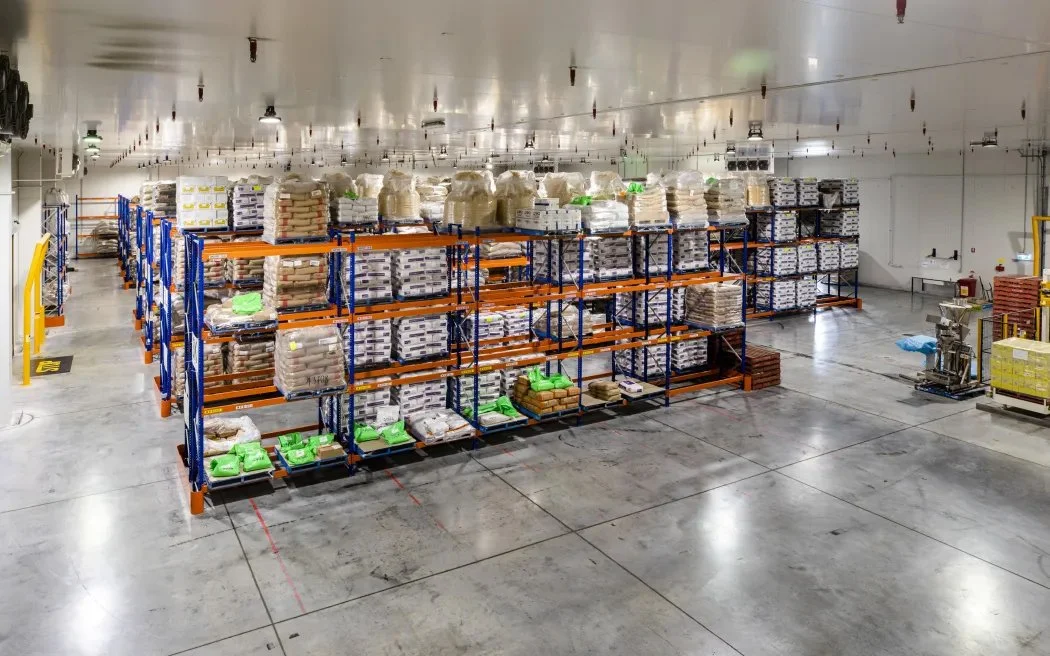
Smith said the building included a controlled aromatic zone and humidity management systems to prevent flavour contamination between spices, coffee, botanicals and other sensitive ingredients.

"When you are working with ingredients like chillies, spices and coffee you cannot risk aroma transferring into a dairy or bakery input. The separation zones and climate control ensure product integrity and support the kind of innovation manufacturers are now delivering," Smith said.

Drury fast developing with strong demand

"A similar build in locations like Mangere, Wiri or East Tamaki would cost around 30 - 40 percent more in annual rent," Smith said.

The Drury South Crossing precinct has become one of the country's most active industrial zones, with Calder Stewart currently developing facilities for major occupiers Briscoes Group and Wesfarmers subsidiary, NZ Safety Blackwoods.

The Drury's large format retail sites were 77 percent conditionally sold to big brand name retail stores including [https://www.rnz.co.nz/news/business/578602/auckland-to-get-a-second-costco-store

Costco Wholesale], Rebel Sport/Briscoes and Harvey Norman.

"The new site sits on a high-profile corner with access for distribution and room for future expansion," Smith said.

"The facility's higher stud height gives Langdon Ingredients significantly greater cubic capacity than its Mount Wellington site, aligning the local operation more closely with the company's larger flagship Australian warehouse."

Smith said there was strong demand for development on Calder Stewart's land holdings in Drury, with about seven hectares of developable land remaining.

"We're in discussions with a range of both long term tenants and owner occupiers, with requirements from 3,000 square metres to over 20,000 square metres. As interest rates ease and construction costs stabilise, we expect activity to lift even further," he said.

Source: Radio New Zealand
Auckland industrial, commercial land shortage pushing prices to record-high levels

Recent property data indicates a shortage of suitably-zoned commercial and industrial land in Auckland is pushing prices to record-high levels, with would-be buyers competing for development-ready sites.

Data from realestate.co.nz showed Auckland's industrial and commercial land values reached an average of $1190 per square metre (sqm) in the 12 months to March, which was the highest level in at least a decade.

The shortage of development sites was driving up land prices, while the average asking price for industrial buildings in Auckland rose to more than $3.5 million for the first time.

The average size of industrial properties available for sale also shrank to a record low of 1864 sqm, from 5212 sqm a decade ago.

The demand was mostly driven by domestic investors, while international activity eased over the past year.

"What we're seeing is a structural shortage of commercial and industrial land, particularly in Auckland," realestate.co.nz chief executive Sarah Wood said.

"There simply isn't enough development-ready land coming to market to meet demand, and that is now being reflected clearly in pricing.

Realestate.co.nz chief executive Sarah Wood. Photo: Supplied

Development shifts south

"This is shifting development patterns, with access to suitable sites increasingly dictating how and where projects can occur, particularly for larger-scale industrial users.

"Over time, that affects where businesses locate, how supply chains are structured, and the cost of operating across the wider economy, including the competitiveness of New Zealand's exports."

Drury South Crossing chief executive Stephen Hughes said the same constraints were playing out on the ground, with limited availability of large, serviced industrial sites across the wider Auckland region.

He said developments, such as Drury South Crossing, were becoming increasingly rare, with only a small number of large, industrial-zoned sites still available for purchase.

"We have sold more than 100 hectares of land at Drury South over the past five years, and with just 30 hectares remaining, we won't be able to accommodate every requirement. Early movers can still secure a site, but the supply of greenfield industrial land at this scale across the region is becoming increasingly limited."

Hughes said rising electricity demand was also reshaping site requirements, with many existing industrial locations unable to support modern business needs.

"It's not just data centres, it's everyday businesses needing more power for automation, machinery and electric vehicle fleets, and many older sites simply can't support that without significant upgrades."

Source: Radio New Zealand

Investment in big box retail projects expected for Drury

The growing South Auckland town of Drury is expecting to see many hundreds of millions of dollars of investment in big box retail projects over the next few years with a scarce supply of suitable land closer to the region's centre.

Drury South Crossing chief executive Stephen Hughes said demand for automatic storage and retrieval systems (ASRS) warehouse facilities, which required 20-to-30-metre high structures was driving demand for land in Drury.

"What we have seen in recent years is a move towards retailers operating on a scale that was previously unprecedented in New Zealand," Hughes said.

"The growth of e-commerce, the consumer expectation of rapid delivery times, and the need to drive cost efficiency in an increasingly competitive retail space are some of the primary drivers for the move towards ASRS."

He said there was also increasing demand for data centre development, with the town investing more than $30m to build a new 60 megawatt power substation at Drury.

Render of a big box retailer. Photo: Supplied / Calder Stewart

"This facility will be one of Auckland's largest and provide the capability to power the equivalent of 45,000 homes. In addition, the transmission lines will have twice the capacity of other areas of the city," he said.

National land and building developer Calder Stewart owned 14 hectares (ha) of development land at Drury South Crossing, which would house retailer Briscoe Group's $100m 3.2ha distribution centre and NZ Safety Blackwoods 2.5ha development, among others.

"We are seeing increasing demand for consolidation as retailers recognise the cost efficiencies from ASRS systems," Calder Stewart associate director Ben Stewart said.

"We know these automated systems can not easily be retrofitted into existing buildings and need to be built from the ground up."

He said big box retailers were consolidating their warehousing from multiple sites into one large automated facility to drive efficiency.

"This scale of these developments requires large greenfield sites of up to 2ha or more, with close access to road and rail transport. Across the Auckland region, there are now very few suitably positioned sites larger than 2ha remaining."

Stewart said the development land at Drury was also cheaper than what was available in industrial areas closer to central Auckland.

Drury also had the advantage of being strategically located within the Golden Triangle transportation hub, which included Tauranga and Hamilton.

Source: Radio New Zealand

Why this $42m super steel site was built in a construction downturn

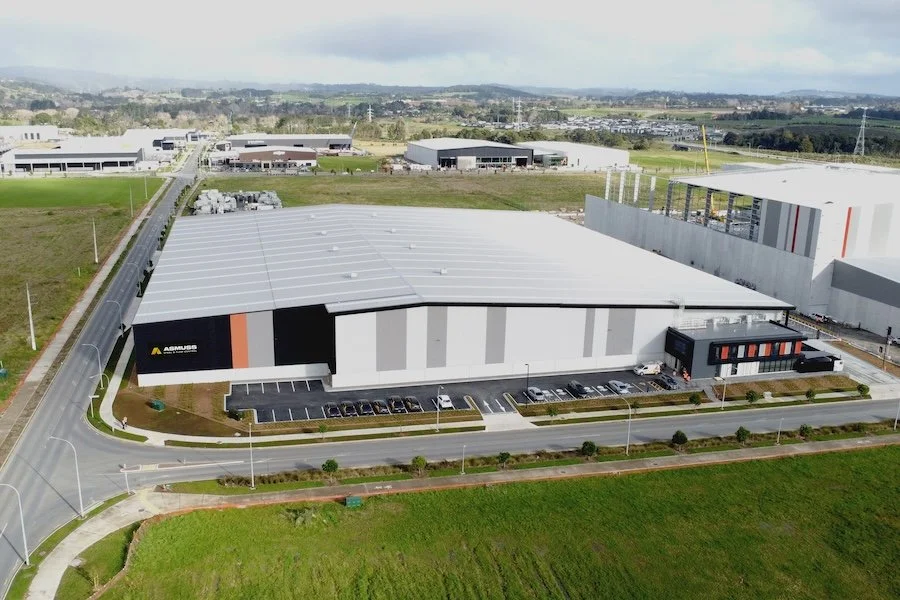
A new 15,000 square-metre steel warehouse in Drury, south of Auckland, can store twice the amount of steel used to build the Auckland harbour bridge.

The $42 million site was designed and built for the privately-owned steel importing business Asmuss, as it prepares to provide products to major infrastructure projects in the North Island.

“We are confident that the market will pick up again, there’s just so much infrastructure investment required in New Zealand,” Asmuss Steel & Flow Control chief executive Dean Brown told Markets with Madison.

“We want to be ready.”

But the market was tough currently, he said, and likely would be for another year.

“We’re on the bottom, we’re waiting for it to pick up.”

The steel stacked in the warehouse was pre-purchased stock and was yet to be sold to projects, but Brown was confident it would be in demand eventually.

“Asmuss has been around for 100 years, we’ve weathered many cycles, this we see as just another cycle and you’ve just got to hold your nerve.”

Steel importer Asmuss has leased a new purpose-built 15,000 square-metre warehouse facility in Drury, south of Auckland. Photo / Ben Dickens - NZ Herald

Asmuss was started in 1920 by Henry Asmuss. It imports steel beams and pipes from mills around the world, including from China, Taiwan, Thailand, South Korea and Australia.

Its products have been behind some of the country’s most significant builds, including the Marsden Point former oil refinery, the Waikato River hydro dams owned by Mercury, Meridian’s Huntly Power Station and the Wellington waterfront stadium.

Source - NZ Herald

New South Auckland logistics facility to support future infrastructure projects

Source - Exporter Today

A new multimillion dollar green logistics facility in South Auckland is set to boost access to steel construction materials needed for New Zealand’s major infrastructure and renewable energy projects.

Latest Government data shows more than $120 billion has been forecast to be spent on infrastructure by the Crown, Crown entities and KiwiRail over the next five years.

The investment is designed to address New Zealand’s infrastructure deficit and prepare the country for future challenges, including population growth and climate change. Key areas of investment include transport, regional infrastructure, resilience and emergency preparedness, public buildings and schools.

Dean Brown, CEO of Asmuss Group, says with over 1,400 infrastructure projects valued at $10 million or more planned in the coming years, improving the construction industry’s supply chain capacity will be critical to the efficient delivery of these projects.

He says the new $25 million, 15,400m2 purpose-built logistics facility at Drury South Crossing can store over 12,000 tonnes of steel, around 2.1 times the steel volume used in the Auckland Harbour Bridge.

“Most of New Zealand’s structural steel needs are met by overseas suppliers and developing the capability to manage the rapid distribution of large volumes of these materials will help ensure that materials are sourced, transported, and utilised effectively to avoid delays.

“The operating model at the new facility has been designed to move high volumes of steel across multiple bays simultaneously, significantly improving operational efficiency and customer service deliveries.

“In practice, this could see us unload 1,000 tonnes of steel, around 42 truckloads, from the port in a matter of days. By introducing greater redundancy and reducing any supply chain bottlenecks we can help support the development of New Zealand’s infrastructure in a shorter timeframe,” he says.

He says the new facility, which will consolidate several of their logistics sites into one location, is now fully operational.

“The new South Auckland location was chosen from over 20 sites around the region however modelling showed Drury was the optimal area, strategically positioned to drive transport efficiencies within the golden triangle.

“As funding conditions improve we are expecting infrastructure activity to increase on the back of Government fast-tracking legislation to stimulate investment.

“Asmuss is playing a crucial role in supplying industries that are the engine room to New Zealand’s economic recovery. We are committed to doing our bit to support the future growth across construction, infrastructure, manufacturing, and emerging markets such as renewable energies.

“We are positioning ourselves to meet this growth with the investment in the new logistics hub, which will help us to expand our capacity to supply major infrastructure and construction projects,” he says.

Stephen Hughes, CEO of Drury South Crossing the country’s largest mixed-used development, says there is a trend towards centralisation of distribution among large-scale operators.

He says the development is rapidly becoming one of the largest distribution centres in the Auckland region.

“What we are seeing is a growing number of businesses looking to consolidate their distribution facilities into one major hub and reduce their operational costs.

“The construction of specialised facilities like the 5 Green Star Asmuss building, which is one of the most sustainable and structurally strongest of its kind in the industry, requires a greenfields site to allow for this level of customised design.

“The demand for this type of development has seen over 70ha sold to large-scale operators, with hundreds of millions of dollars set to be invested in new facilities to supply the region.

“Businesses opening in the area are also accessing a local workforce that doesn’t want to travel into Auckland,” he says.

Source - Exporter Today Editorial Team

Q&A Interview with Stephen Hughes of Drury South Crossing

Stephen Hughes, Chief Executive of Drury South Crossing – a development company owned by Stevenson Group – discusses their plans in a 20-year industrial development in Drury, South Auckland, and why it’s seeing demand from a broad range of businesses.

What are Stevenson Group’s strategic plans in the industrial space in Drury – what have you done up until now, and what are your plans for the next five years?

The next five years are going to be the tail end of what will have been a 20-year journey. Over the last 14 years we’ve undertaken the plan change, designed and engineered various infrastructure requirements, and acquired nearly 40 properties. Now we’re in a stage where we’re implementing all those plans. So, we are building roads, wetlands, infrastructure connections, undertaking earthworks and delivering land for industrial, housing, office and retail.

Looking forward, it’ll be a continuation of our sales programme, but also an opportunity for us to remain flexible and respond to the market.

One of the lessons we’ve learned over 14 years is that you can’t predict exactly what the market needs are. The best you can do is retain flexibility, to meet the demand that comes along. So, the big change for us is that we’ve introduced residential and a bit more retail and office, and created much more of an integrated development as opposed to just a standalone industrial precinct.

What are the strengths of Drury as a location in the context of the Auckland–Hamilton corridor, and the golden triangle, and what do you think are the industries that would benefit most from being there? 

Drury is exceptionally well placed because it is within about an hour of almost half of New Zealand’s population, so it’s very close to a big chunk of the New Zealand market, and a sizeable local labour market. 

When we look back to the beginning, a lot of what we were doing was about creating jobs out in Drury and reversing traffic movements in the city. We saw the benefit in turning some of those traffic flows around so people aren’t driving north into the congested parts of Auckland but can have a job in the south and multiple options for how they get there. For those businesses located at Drury South Crossing they will be well placed to distribute services through not just Auckland but also the wider area, especially the Tauranga–Hamilton corridor. 

In the Auckland context, Drury is at that point where the isthmus widens. If you look at somewhere like Mount Wellington, for example, between the Tāmaki River in the east and the Manukau Harbour in the west, it is only about 2km wide. This creates a bottleneck and limits growth potential in such locations. Looking at the land surrounding Drury South Crossing, you can see that the opportunities for scale are far greater than in other, more established parts of Auckland. 

The industries that would benefit from being here are those which need larger footprints of land, and those businesses that are looking to distribute within and outside of Auckland. For those that are distributing to the upper North Island, I think there are some advantages to being on the edge of the city, where there is less congestion, rather than right in the middle.

Based on what you’ve developed in phase one, what’s the mix of industries that have shown interest in Drury?

There’s been interest, including acquisitions, from a full range of industries. For example, logistics and warehousing, transport businesses, automotive, contractors, trade retail, food manufacture and distribution.

And on top of that, there are some we didn’t anticipate that have made enquiries in the last year, such as data centres and film studios. When we began 14 years ago, our thinking was very much around the quarry and the construction market. But what we’re seeing is demand from a broad range of businesses.

We’re also seeing quite a bit of demand from the construction sector. That’s in part because of the significant investment that’s earmarked for the wider Drury area. It obviously makes sense, if you’re in the construction industry, that this is a good place to be.

New Drury South Masterplan V2.jpg

From your perspective, what needs to be done to plan for large-scale job creation in Drury? And what is the importance of industrial land in that context?

Over the last 14 years we’ve proved the concept and have seen strong demand for industrial and residential property, this will ultimately feed demand for the retail and office sector. 

Typically, industrial land is a leader. It’s driven by businesses needing larger footprints of land, and these are more readily found on the outskirts of the city. The key opportunity with Drury is to ensure that the infrastructure and resilience are planned well in advance. We can learn lessons from some of the other areas in Auckland that have been developed, like Wiri, Albany and East Tāmaki. These areas were established circa 30 years ago and still have issues associated with infrastructure, and ultimately this throttles growth. It’s a lot easier to plan these things in advance rather than try to fix problems later on. The wider Drury area is still full of opportunity to get the infrastructure right. This means enabling a range of transport modes, but also constructing a road network that provides resilience with multiple arterials, not just State Highway 1.  That’s probably the key in terms of activating and ensuring that vision for wider employment.

In your view, what type of anchors or anchor tenant would benefit Drury by helping to build an ecosystem or supply chain around them?

That’s an interesting question. We initially thought that we’d be securing a large, multinational anchor tenant to kick start development at Drury South Crossing. However, we have found that when we look at our customers to date, it hasn’t been one business or one business type that’s enabled us to proceed, it’s the collective - we have more than thirty different businesses that have purchased land. To me, it’s not so much trying to pick what business may want to be here. Rather, it’s about developing the roads and the infrastructure for a range of options – in terms of use, shape and size – and ultimately providing the flexibility that makes Drury South Crossing viable for the market.
What’s your message to capital providers and businesses who may be looking at Auckland, specifically Drury?

I think it’s very easy to underestimate the pace of change in development and whilst Drury is somewhat of a blank canvas today, after 14 years of preparation we’re now seeing things taking shape on the ground. As people gain more confidence in the Drury location, progress will really accelerate. So, I’d be saying that some of these opportunities will come and go; land is selling, and it won’t always be available as people would like it – be it for industrial business, residential homes, or even large-scale infrastructure. Now’s the time to be proactive, look at what you’re trying to achieve, and seize the day.

Multimillion-dollar freshwater wetland opens

Eel-wetland-C&C-May-2021-S-001.jpeg

A new multimillion-dollar public wetland has opened in Dury to improve water quality and support endangered native wildlife.

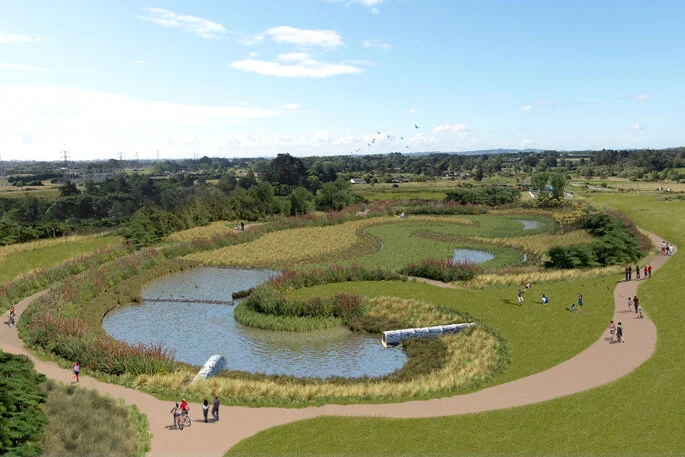
The 35,000sqm freshwater wetland is one of the largest constructed wetlands in the country.

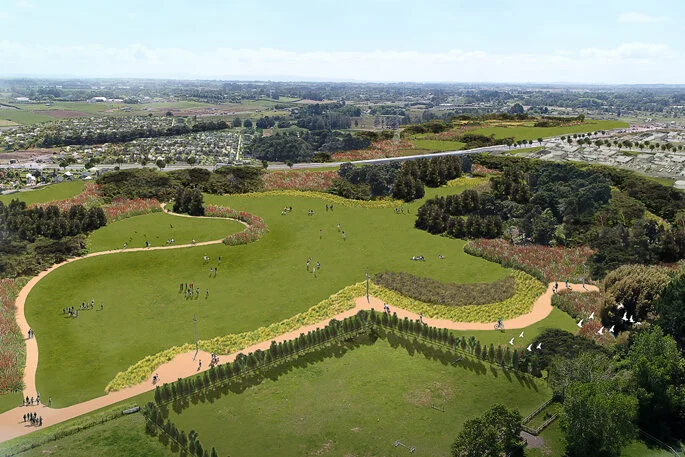
The constructed wetland at the 361ha Drury South Crossing subdivision, the country’s largest industrial and residential development, is designed to improve water quality in the area and provide a habitat for endangered native eels, fish and birds and, form part of an extensive new public recreation area.

Located in one of Auckland’s deepest flood plains, the wetland is designed to hold floodwater volumes of up to 58,900m3 – the equivalent capacity of 23.5 Olympic size swimming pools.

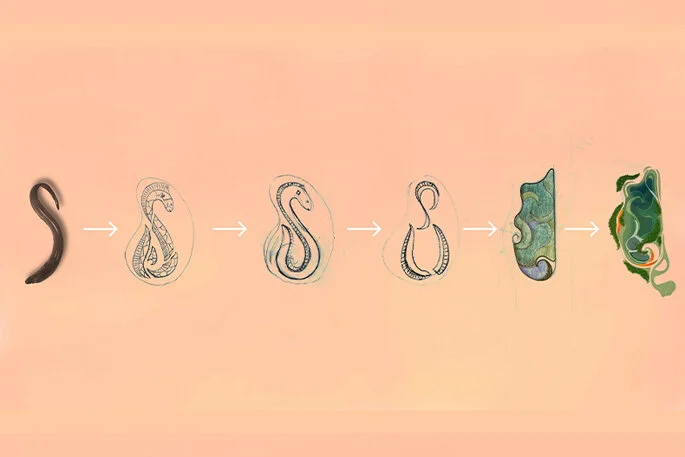
The wetland is designed in the shape of a tuna (eel), a culturally significant motif that provides the stormwater management system with a mechanism to reduce the speed of water entering the catchment area through a network of high volume intake pipes at up to 16m3 of water per second.

Eel-wetland-C&C-May-2021-S-006.jpeg

Tikanga Maori design

Dam design experts on the project worked with Ted Ngataki and Maaka Potini, local Maori artists, to incorporate Tikanga Maori and the concept of a tuna/eel into the Wetland design.

The tuna was selected as having particular significance to iwi as they are indigenous to the area and were once prevalent and a key part of traditional diet and trade.

Tonkin Taylor project manager Peter Norfolk says the new wetland is uniquely designed to act as a dam in both directions – holding the wetland water in during normal operation but overtopping into the wetland in very large flood events to provide additional flood capacity in the floodplain.

“The tuna design was chosen for both its cultural significance to mana whenua as well as for functional purposes,” says Peter.

“The complexity of the S-shaped design with its winding curves and varying elevations is necessary to control the high velocity of the water entering the forebays through 2-2.5m pipes, reducing it to a slow meandering stream and filtering the water to allow the natural removal of sediment and pollutants before it passes through a green outfall into the Hingaia Stream and into the Manukau Harbour.”

Norfolk says the wetland has taken two years to complete and required the excavation of more than 396,000 tonnes of earth.

He says the creation of the wetland with this degree of complex geometry would not have been possible within this timeframe without advancements in 3D modelling technology and integrated guidance systems for excavators.

“Bringing this design to life in a relatively short space of time required the latest in sophisticated 3D modelling and construction techniques, which are used to guide the excavators via GPS.”

Eel-wetland-C&C-May-2021-S-004.jpeg

Environment conscious

Drury South Crossing chief executive Stephen Hughes says a number of environmental considerations have been integrated into the new subdivision. These include removing pollutants such as zinc – the most common of all heavy metal contaminants in urban rivers and streams, from roofing materials used on site.

Drury South Crossing chief executive, Stephen Hughes.

“In the past, residential lawns and grass around houses would have helped contribute to capturing sediment from stormwater runoff however modern subdivisions tend to have less lawn which increases the need to capture runoff from surrounding roads and housing,” says Stephan.

“While filtering stormwater and runoff is a key aspect of protecting our urban waterways, we have gone a step further by preventing unpainted roofing materials made with zinc from being used at the subdivision.

“The creation of this new wetland and public recreational area is designed to set a new standard for residential and industrial developments.”

Eel-wetland-C&C-May-2021-S-003.jpeg

Work on Auckland's Drury South Crossing is ahead of schedule

Week on Demand - Drury South Crossing
NewstalkZB

The country's largest industrial and residential development will see about six thousand people employed in the distribution, food processing, tech, manufacturing and logistics sectors.

It had been thought construction on the first of the new warehouses and commercial facilities on the land, would start late this year.

But CEO Stephen Hughes says strong domestic demand means they're ahead of expectations.

He says they settled their first titles just prior to Christmas -- so anticipates construction on those buildings will begin in the first half of this year.

$6m Native Planting Project to Bring Environmental, Employment Boost

DSC-Wetland1.jpg

A new multi-million dollar native planting project now underway in Auckland is set to offer employment to hundreds of locals and restore native ecological systems for threatened birdlife.

The project is one of the largest privately-funded native plantings in the region to date and will see half a million native plants and trees to be installed over the next 3-5 years, across 85 hectares of connected open space, recreation areas, and wetlands.

The planting of native species at the 361 hectare Drury South Crossing subdivision, the country’s largest industrial and residential development is designed to provide a habitat for endangered native birds, lizards and bats, improve water quality in the area and form part of an extensive new recreation area for Aucklanders.

Mark Lewis, Boffa Miskell project landscape architect for the South Auckland development, who is involved in the creation of the naturalised environment, featuring native plantings ranging from flaxes and grasses to hectares of forest, says extensive research and planning went into understanding the specific environmental needs of the area.

He says the project team worked closely with Auckland Council and mana whenua to develop diverse native planting types, representative of historic vegetation in the area.

“One of the key outcomes of our consultations with local iwi and hapū will see the establishment of hectares of harakeke and purei wetlands, and large stands of kahikatea, kanuka, podocarp, and broadleaf forest types.

“These restored natural systems will connect mature vegetation remnants scattered across the site”.

“The first stage of the project began more than a decade ago, with bird surveys and mapping of key existing vegetation. This has continued throughout the delivery of the project, surveying for lizards, birds, bats, and fish to help us create suitable habitat to support growth in their numbers.” he says

Lewis says the researchers identified more than fifty bird species in the area of which eight are considered threatened or endangered.

“The creation of new habitats for bird species like the grey duck, red-billed gull, white heron, kaka and pied shag has been a priority in the planning of this project.”

“The first stage of the restoration programme this year will see more than a quarter of a million native plants introduced to help support the regeneration of indigenous birdlife, with this number of plants set to double.”

“With mana whenua’s guidance, we also integrated hundreds of native trees into all the streetscapes of the project, including kahikatea, totara, puriri, karaka, and titoki, which are now returning to the landscape once more.” he says.

Stephen Hughes, Drury South Crossing CEO, says the scale of the planting programme is so large it has been spread over four contractors and will take up to 200 workers years to complete.

“It was important for us to not only create a lush recreational area for Aucklanders living or visiting the area but also provide an enduring ecological benefit for the region’s inhabitants.”

“It is our aim to showcase the benefits of environmental investment in the creation of living spaces and see this used as a model for future developments in Auckland.” he says.

Dennis Kirkwood, Chairperson of the Ngati Tamaoho Trust says the planting initiative is an example of where intensive development can achieve great environmental benefits and create jobs.

“We have alongside the with the team at Drury South Crossing over the past decade to help guide and provide meaningful input into the environmental enhancements of this project that will see this through to fruition.”

“As a result, Ngati Tamaoho have been able to support the protection of existing habitat and the creation of new habitat for the birds, bees, Mokomoko, Pekapeka and fishes that are at the core of Te Taiao responsibilities.”

“We believe the outcome of this project will be extremely rewarding.” he says.